The Chester Zoo celebrated the birth of a new female Asian elephant and mourned the death of the herd's matriarch within a three week period.
Narrating the correlation of elephants as related to their import, groupings, breeding and transfers,
along with other elephant related topics.
Friday, February 11, 2011
Thursday, February 10, 2011
Oregon Zoo - Intersections
From the Oregon Zoo's Official Facebook page:
"Our videographer put together a BEAUTIFUL video of our elephant herd interacting — watch and let us know what you think. Also, remember that Oregon Public Broadcasting wants to know if you’re a fan of Oregon Zoo elephants. Go to their website to comment: http://bit.ly/OPB_elephants
Wednesday, February 9, 2011
Emmen Zoo Birth
The Emmen Zoo in the Netherlands celebrated the birth of a male calf on February 6, the second to be born in the outdoor exhibit with the herd. The calf was the fourth for the thirty year old Burmese cow Htoo Yin Aye. It was sired by the zoo’s breeding bull Radza. The 44 year old male arrived at Emmen in 2003 from Latvia. Since Radza's arrival, he has sired twelve calves. The new calf brought the zoo’s herd size to thirteen, seven of which are males.


Newborn male calf, Dierenpark Emmen, Feburary 2011.
Photo Courtesy of Dierenpark Emmen / Wijbren Landman
Tuesday, February 8, 2011
Remote Elephant Center
Two locations have been identified as possible sites for the Oregon Zoo’s Remote Elephant Center (REC), both in Clackamas County. The overall goal of the Center is to establish what zoo officials call a “multigenerational, matriarchal breeding herd of Asian elephants that will be sustained for generations.” It could house four bulls and 12 females, but females could be transported between the two herds — at the zoo or the center — depending on how the shift might support the zoo’s goals. According to the plan presented to the Metro Council, the elephant center could be open to the public at least twice a year to showcase the work being done there and highlight the elephant program’s vision. In addition, the site could be used for educational tours and classes for all ages. Elephants would enjoy a “socially and environmentally enriching environment,” as well as more natural and less confining habitat than provided at the zoo in Portland. This is the third type of similar institution designed "off-site" from the public for zoos to maintain groups of elephants.
>> "Zoo packing trunks for Sandy?" SandyPost.com, 02/08/2011
National Elephant Center
The first in discussion was the National Elephant Center, currently planned for St. Lucie County, Florida. County Commissioners approved the development of the facility, though conditions were set regarding elephant management that possibly postponed further planning at the proposed site.

>> http://www.thenationalelephantcenter.org/
International Conservation Center
The second planned facility and first of its type to open was the International Conservation Center in Somerset County, Pennsylvania. An off-site extension of the Pittsburgh Zoo, the facility houses a male and two female African elephants. The main goal of the Elephant Care Program is "to play a major leadership role in addressing the needs for breeding the African elephant population in North America."

>> http://internationalconservationcenter.org/
>> "Zoo packing trunks for Sandy?" SandyPost.com, 02/08/2011
National Elephant Center
The first in discussion was the National Elephant Center, currently planned for St. Lucie County, Florida. County Commissioners approved the development of the facility, though conditions were set regarding elephant management that possibly postponed further planning at the proposed site.

>> http://www.thenationalelephantcenter.org/
International Conservation Center
The second planned facility and first of its type to open was the International Conservation Center in Somerset County, Pennsylvania. An off-site extension of the Pittsburgh Zoo, the facility houses a male and two female African elephants. The main goal of the Elephant Care Program is "to play a major leadership role in addressing the needs for breeding the African elephant population in North America."

>> http://internationalconservationcenter.org/
Sunday, February 6, 2011
A Word From Our Sponsors
ShowMe Elephants would like to extendend the deepest appreciation to the following sites for their gracious and unrequested advertising.
Dick Dykes
>> http://dick-dykes.blogspot.com/
Ken Young
>> http://www.kenyoung.net/circus.html
Natalie Cainan
>> http://circusmom.blogspot.com/
Wayne Jackson
Zoo News Digest
>> http://zoonewsdigest.blogspot.com/
Dick Dykes
>> http://dick-dykes.blogspot.com/
Ken Young
>> http://www.kenyoung.net/circus.html
Natalie Cainan
>> http://circusmom.blogspot.com/
Wayne Jackson
Zoo News Digest
>> http://zoonewsdigest.blogspot.com/
Friday, February 4, 2011
Bulls of Zoo Miami
Zoo Miami currently houses two separate herds of elephants. Machito, Miami's 31 year old African bull resides with two 35 year old African cows, Maybel and Peggy. Miami also houses a 45 year old male Asian elephant, Dahlip, with a 42 year old Asian cow named Nellie. The elephants are managed in protected contact.
Dahlip
Dahlip has sired four calves with the female Seetna at Zoo Miami. Dahlip and Seetna were both born within a month of each other at the Trivandrum Zoo in Kerala, India. They arrived together to Miami MetroZoo in August 1967. A male calf named Rocky was born in April 1977 but died after seventeen days. Another male was born in Jul 1981. This calf, originally named Ganesha, would be the only surviving offspring of Dahlip. A third female calf named Pearl was born in October 1985 and died two days later. The final calf was stillborn in May 1996. Complications of this birth would cause the death of the 30 year old mother Seetna, requiring her euthanasia.
In February 2010, the Miami MetroZoo used a water-cooled hand saw to trim 12 inches of ivory from Dahlip's tusks to prevent him from injuring himself by hitting them on the floor when he walks. The 12000 pound elephant was forty three years old.
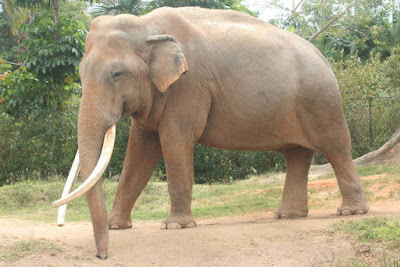
Machito
Although kept with several females at Zoo Miami, Machito has only sired one calf. He bred with Tribby before her transfer to the Cleveland Zoo in November 1992 following the destruction caused by Hurricane Andrew. She gave birth to a male calf in March 1994, though the animal only survived a day. It was the only elephant birth at the Ohio zoo.
Spike (Ganesha)
Miami MetroZoo's only surviving elephant birth occurred in July 1981. The calf was named Ganesha after the Hindu god. After Hurricane Andrew devastated the zoo in 1992 and several elephants residing at the zoo were temporarily or permanently relocated, Ganesha was moved to the Calgary Zoo in Canada and renamed Spike.
Spike has sired two calves in Calgary. Keemaya was born in November 2004, though she was rejected by her 14 year old mother and later developed an infection. She died within several weeks. The pair's second calf was born in August 2007 and named Malti. In late October 2008, the fourteen month old calf was diagnosed with Elephant Endotheliotropic Herpes Virus and died six days later. At the time of Malti's death, only four elephants were known to have experienced symptoms of the disease and recovered.
Both calves born to Spike and Maharani were full F2 generation births, meaning both of their parents were born in captivity. Maharani was born at the Calgary Zoo to Bandara and Kamala in July 1990.
Spike currently weighs 12,500 pounds and measures 11'6" at the shoulder.
Records
Dahlip (Dalip), Male Asian, SB 139
10 Jul 1966 - Birth, Trivandrum Zoo, Kerala, India
26 Aug 1967 - Miami MetroZoo, Miami, Florida
11 Sep 1992 - Two Tails Ranch, Williston, Florida
02 Jun 1995 - Miami MetroZoo, Miami, Florida
>> Dahlip at Elefanten-Fotolexikon.eu
Machito, Male African, SB 197
Apr 1980 - Birth, Zimbabwe
Jul 1981 - Catskill Game Farm, Catskill, New York
13 Sep 1981 - North Carolina Zoo, Asheboro, North Carolina
11 Nov 1981 - Miami MetroZoo, Miami, Florida
>> Machito at Elefanten-Fotolexikon.eu
Spike (Ganesha), Male Asian, SB 141
02 Jul 1981 - Birth, Miami MetroZoo, Miami, Florida
19 Sep 1992 - Calgary Zoo, Calgary, Alberta, Canada
>> Spike at Elefanten-Fotolexikon.eu
Additional Information
"A Tusky Situation," 02/04/2010
>> http://www.elephant-news.com/index.php?id=5181
"Calgary Zoo Celebrates Elephant Calf Arrival," 08/09/2007
>> http://www.elephant-news.com/index.php?id=2574
"Baby Elephant Gravely Ill of Herpes Virus," 11/01/2008
>> http://www.elephant-news.com/index.php?id=4316
Dahlip
Dahlip has sired four calves with the female Seetna at Zoo Miami. Dahlip and Seetna were both born within a month of each other at the Trivandrum Zoo in Kerala, India. They arrived together to Miami MetroZoo in August 1967. A male calf named Rocky was born in April 1977 but died after seventeen days. Another male was born in Jul 1981. This calf, originally named Ganesha, would be the only surviving offspring of Dahlip. A third female calf named Pearl was born in October 1985 and died two days later. The final calf was stillborn in May 1996. Complications of this birth would cause the death of the 30 year old mother Seetna, requiring her euthanasia.
In February 2010, the Miami MetroZoo used a water-cooled hand saw to trim 12 inches of ivory from Dahlip's tusks to prevent him from injuring himself by hitting them on the floor when he walks. The 12000 pound elephant was forty three years old.
Machito
Although kept with several females at Zoo Miami, Machito has only sired one calf. He bred with Tribby before her transfer to the Cleveland Zoo in November 1992 following the destruction caused by Hurricane Andrew. She gave birth to a male calf in March 1994, though the animal only survived a day. It was the only elephant birth at the Ohio zoo.
Spike (Ganesha)
Miami MetroZoo's only surviving elephant birth occurred in July 1981. The calf was named Ganesha after the Hindu god. After Hurricane Andrew devastated the zoo in 1992 and several elephants residing at the zoo were temporarily or permanently relocated, Ganesha was moved to the Calgary Zoo in Canada and renamed Spike.
Spike has sired two calves in Calgary. Keemaya was born in November 2004, though she was rejected by her 14 year old mother and later developed an infection. She died within several weeks. The pair's second calf was born in August 2007 and named Malti. In late October 2008, the fourteen month old calf was diagnosed with Elephant Endotheliotropic Herpes Virus and died six days later. At the time of Malti's death, only four elephants were known to have experienced symptoms of the disease and recovered.
Both calves born to Spike and Maharani were full F2 generation births, meaning both of their parents were born in captivity. Maharani was born at the Calgary Zoo to Bandara and Kamala in July 1990.
Spike currently weighs 12,500 pounds and measures 11'6" at the shoulder.
Records
Dahlip (Dalip), Male Asian, SB 139
10 Jul 1966 - Birth, Trivandrum Zoo, Kerala, India
26 Aug 1967 - Miami MetroZoo, Miami, Florida
11 Sep 1992 - Two Tails Ranch, Williston, Florida
02 Jun 1995 - Miami MetroZoo, Miami, Florida
>> Dahlip at Elefanten-Fotolexikon.eu
Machito, Male African, SB 197
Apr 1980 - Birth, Zimbabwe
Jul 1981 - Catskill Game Farm, Catskill, New York
13 Sep 1981 - North Carolina Zoo, Asheboro, North Carolina
11 Nov 1981 - Miami MetroZoo, Miami, Florida
>> Machito at Elefanten-Fotolexikon.eu
Spike (Ganesha), Male Asian, SB 141
02 Jul 1981 - Birth, Miami MetroZoo, Miami, Florida
19 Sep 1992 - Calgary Zoo, Calgary, Alberta, Canada
>> Spike at Elefanten-Fotolexikon.eu
Additional Information
"A Tusky Situation," 02/04/2010
>> http://www.elephant-news.com/index.php?id=5181
"Calgary Zoo Celebrates Elephant Calf Arrival," 08/09/2007
>> http://www.elephant-news.com/index.php?id=2574
"Baby Elephant Gravely Ill of Herpes Virus," 11/01/2008
>> http://www.elephant-news.com/index.php?id=4316
Thursday, February 3, 2011
"What the Elephants Know"
By Nicholas Hune-Brown
Toronto Life
Posted June 29, 2010 at 8:57 AM
"The Toronto Zoo has lost four elephants in as many years, and the fate of the remaining herd—Iringa, Thika and Toka—is uncertain. Can a one-hectare habitat in the middle of a northern city be any kind of home for exotic animals with complex thoughts and feelings?"
Comments on this article:
"One of the finest articles ever written, going over the intricacies of keeping creatures as magnificient as elephants in captivity… their intelligence, charm, grandeur does not warrants them for the poor life they face while in captivity… no wonder in religions such as hinduism, elephants have been worshiped for decades… hats off to toronto life for publishing this great article… only if humans could learn something from elephants??"
June 29, 2010 at 12:21 pm | by Rahul Kushwah
"Thank you for this thoughtful piece of writing. So much journalism these days seems to pick a side and advance it unrelentingly. In such pieces you can see that the presentation of the facts is skewed by the author’s position and you wonder where the inevitably nuanced and complicated “truth” is underneath the polemic. This makes me all the more appreciative of a piece like this that in my view attempts to take a fair and balanced approach to everyone involved. It is clear that this is a complicated issue with no easy answers. How refreshing to have it presented to us in such an intelligent and forthright manner. More like this please."
July 24, 2010 at 2:22 pm | by Cara Gibbons
>> http://www.torontolife.com/daily/informer/from-print-edition-informer/2010/06/29/what-the-elephants-know/
Toronto Life
Posted June 29, 2010 at 8:57 AM
"The Toronto Zoo has lost four elephants in as many years, and the fate of the remaining herd—Iringa, Thika and Toka—is uncertain. Can a one-hectare habitat in the middle of a northern city be any kind of home for exotic animals with complex thoughts and feelings?"
Comments on this article:
"One of the finest articles ever written, going over the intricacies of keeping creatures as magnificient as elephants in captivity… their intelligence, charm, grandeur does not warrants them for the poor life they face while in captivity… no wonder in religions such as hinduism, elephants have been worshiped for decades… hats off to toronto life for publishing this great article… only if humans could learn something from elephants??"
June 29, 2010 at 12:21 pm | by Rahul Kushwah
"Thank you for this thoughtful piece of writing. So much journalism these days seems to pick a side and advance it unrelentingly. In such pieces you can see that the presentation of the facts is skewed by the author’s position and you wonder where the inevitably nuanced and complicated “truth” is underneath the polemic. This makes me all the more appreciative of a piece like this that in my view attempts to take a fair and balanced approach to everyone involved. It is clear that this is a complicated issue with no easy answers. How refreshing to have it presented to us in such an intelligent and forthright manner. More like this please."
July 24, 2010 at 2:22 pm | by Cara Gibbons
>> http://www.torontolife.com/daily/informer/from-print-edition-informer/2010/06/29/what-the-elephants-know/
Subscribe to:
Posts (Atom)


